
Order Your Copy of The Seven Daughters of Dupree!
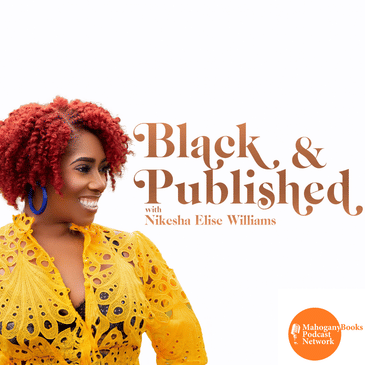
This week on Black & Published, Nikesha speaks with Toni Ann Johnson author of the new short story collection, But Where's Home. The collection dives even further into the world she’s built with previous publications of a middle class Black family, in a majority white enclave in upstate New York.
In our conversation, Toni Ann explains why she keeps returning to auto fiction as her chosen form instead of memoir or an autobiography. Plus, how she learned to decolonize her own mind and why she says it’s difficult to set a boundary with abusive parents.
Mentioned in this episode:
Rate & Review
Thanks for listening, family! Please do us a solid and take a quick moment to rate and/or leave a review for this podcast. It will go a long way to making sure content featuring our stories and perspectives are seen on this platform
[00:00:00] What's good, family? I'm Nikesha Elise Williams, the host of Black & Published Podcast and the author of the novel The Seven Daughters of Dupree. This historical fiction novel is about the secrets kept between mothers and daughters over the course of seven generations and is told backwards in time from 1995 to 1860.
[00:00:19] I have an excerpt from the novel for you today. The audiobook is narrated by Bonnie Turpin and this scene you're about to listen to is from chapter 15 and features the character Nadia who was writing a letter detailing her fears about her pregnancy. How do you carry a child in fear? Step one, it starts with him not being here. Step two, forget the fairy tales.
[00:00:49] Step three, remember the lies. I'm going to leave my wife. I don't want to live my life without you. Step four, replay the reaction when you told him the news. What the hell you want me to do? You know I already got a ball and three chains. Step five, sing to yourself, is my living in vain?
[00:01:18] Step six, pray. Step seven, break the news to mama. Step eight, go to church with her. Step nine, be mortified by her testimony filled with your shame. Step 10, be repenting. Step nine, keep it. Columplish practices. Step 10, find yourself, attack, and keep it.
[00:01:42] Keep it. Adoption? Abortion? Step 11, make a decision. Step 12, doubt decision. Step 13, repeat steps. 10, 11, and 12 until you're three months out from your due date. Step 14. Realize it's too late.
[00:02:06] Step 15. Try to tell him again. Step 16. Find out he's moved. Step 17. Make a plan. Step 18. Doubt the plan. Step 19. Cry uncontrollably, inconsolably until you're out of tears.
[00:02:31] Step 20. Remember step one. He's not here. The format you prefer. Hardcover, ebook, audiobook, and large print. So if you can, please consider getting a copy of The Seven Daughters of Dupree today.
[00:03:00] Now let's get to the episode. There is no negotiating with somebody like that. If somebody thinks that it's okay for them to talk to you a certain way or to be physically violent with you or to be continually disrespectful, why would you keep doing that to yourself? Mm-hmm. What's good? I'm Nikesha Elise Williams, and this is Black & Published on the Mahogany Books Podcast Network.
[00:03:25] Bringing you the journeys of writers, poets, playwrights, and storytellers of all kinds. We have a return guest today. Toni Ann Johnson is back with her new collection of short stories that also includes a novella entitled But Where's Home?
[00:03:41] The collection dives even further into the world that she's built with her previous publications of a middle-class Black family in a majority white enclave in upstate New York, and how that move is detrimental to everyone in the Arrington clan. This was the story that made me want to be a writer. Because I was so frustrated by what was happening, and that's why I was writing about it.
[00:04:06] I was trying to understand it, and I was trying to look at it and say, this is nuts. These people are nuts. They are crazy, and I am stuck here. The stories of the Arrington family are pulled straight from Toni Ann's own life, of course, with many embellishments. Why she keeps returning to autofiction as her chosen form instead of memoir or an autobiography.
[00:04:31] Plus, in growing up to see superiority in whiteness, how she learned to decolonize her own mind and do the same for her characters. And why she says it's difficult to set up a boundary with abusive parents and choose estrangement even when it's mentally necessary. That and more is next when Black and Published continues.
[00:04:57] Toni Ann Johnson, you were here for Lights Getting Gone to Waste a couple years ago. Yeah, thanks for having me back. For sure. And it's for your book, But Where's Home? Featuring the same cast of characters with Phil and Velma and Maddie and Susie and the whole gang. What's different this time?
[00:05:17] This book has more of a focus on the idea of home and what it is and that they've left their, you know, Black community to be in this white environment. I mean, that was part of the other book, too. But the stories, I think you can kind of find within all of the stories, either a search for home or a wish to define home or belong to home. So I think the theme of the first book was a little bit different.
[00:05:45] And the through line was more about the protagonist, Maddie, and her feelings about the town. And this book is, I feel like it's a bit more about the parents and the daughters and dealing with their issues and just trying to survive those issues. It's slightly different. It's definitely the same world, the exact same world, but it moves farther forward in time.
[00:06:09] We see some of the things we didn't get to see in the first book, some of Maddie's reaction to her mother's treatment of her that you might have missed in the first book. So, yeah, it's different in that way and a little more focused towards that one theme. Yeah, I enjoyed seeing Maddie fight back against her mother, Velma.
[00:06:32] I also was taken aback because I think, believe, you start this collection, which is stories and a novella with the sister and how she was treated by Velma, which is her stepmother and her father. And how she was, you know, really trying to fit into the family. And, you know, that question of home for her was she split between two worlds from, you know, her mother and her grandparents in Brooklyn and then her father and her half sister and her stepmother out in this all white enclave.
[00:07:02] And I really enjoyed getting to see them grow up because we didn't see them get to like there were a few flash forwards where Maddie is an adult. But in this one, we kind of could see them through their teen years and in their college years, which I really, really enjoyed. In giving them more agency in this collection, did that help you kind of unearth some other memories or unlock some other pieces of yourself as well as you as a writer in the telling?
[00:07:32] I think that they were doing more agency. I think that they were doing more agency helped me explore their understanding of what was going on, which at the time, you know, this is based on my family. So when I was actually going through some of that stuff and the same thing with my sister, I don't think we were quite as cognizant of how truly messed up some of this stuff was.
[00:07:56] Like how truly messed up the way that first of all, the way that our father kept her kind of separate. That was one issue, but also the way that their father brought Maddie into his adult life in such an inappropriate way, like using her almost like a partner rather than, you know, keeping the boundaries between father daughter relationship.
[00:08:21] Like she was almost, he treated her like his peer and his partner almost. And then once he had a partner, a new girlfriend, he will push her aside. And then when that wasn't, you know, working, then he would bring her back. But this giving them the ability to articulate their perspective and also giving them, if not, you know, Livia has some kind of financial independence and distance.
[00:08:49] Maddie doesn't have that, but she is the truth teller in the family. So she is able to just call him on his stuff in a way that she couldn't do in the first collection. She was too young to understand what it was and wouldn't be able to articulate it. What always bothers me about the father, about Phil, especially in this collection, is that not only is he, you know, a psychoanalyst, but he's so goddamn manipulative.
[00:09:18] Like, oh my gosh. Like the way in that you tell the stories about how he weaponizes money against Maddie and paying for her school, pits her against her sister, her against her mother, foists himself into her life in a way that is wholly inappropriate. And does this until death and even beyond the grave.
[00:09:43] In this collection, I was just like, oh, this man, this man, this man. Yeah. I know you say it's, you know, it's drawn upon your own experiences and loosely based upon your own familial ties. It's not that loose. You said it. I didn't. I'm not trying to make no assumptions and get nobody in trouble. I know we've had this conversation before, but I try to, I want to leave with the respect. Okay. Thank you.
[00:10:13] Did you ever come to understand in writing Phil, your own father's machinations and manipulations of how he really bent situations toward his will? I did, but they, yes. And they were also complicated by my mother's bending of situations, trying to manipulate things for her will.
[00:10:40] In the But Where's Home novella, I guess is where it really comes to a head and the most manipulation is happening. And I understand it now in a way that I didn't understand it when I was first exploring this. So the first version of But Where's Home, the novella that's in the book, was the first screenplay I ever wrote. I was still at NYU when I wrote it. So it was maybe like a year and a half past the events. So it was still very fresh.
[00:11:08] And as I was writing it, I was reading it in a class that I was taking. And my classmates and my professor were the ones who said, you need to just like cut off your father emotionally because he's using you. And I was like, he is? Like, I just didn't get it. And so I was writing it then as an older teenager.
[00:11:30] And then now, you know, as an adult, as a much older person, it's much clearer to me what's going on. And it produces a lot more anger in me that that was, you know, how I was used. But there's also things about it that are kind of amusing. Like he's just so egregious that sometimes it's funny. He's so ridiculous. He's so like over the top ridiculous that all I could do is just laugh.
[00:11:59] So I'm writing it and I was like, yes, that shit happened. And that was really wild. And goddamn if it isn't funny. It's just funny to me. Like Phil setting Maddie up to walk in on him and his girlfriend in precarious situations, having a bust of a sex act on his desk.
[00:12:20] Like it was so much and yet she grows up as if this is normal and there is no safe haven for her with him or with her mother, even though she still yearns for that. Yeah. Are you still estranged from your mom? Yes. And that was something that was kind of I think this was the story that made me want to be a writer because I was so frustrated by what was happening.
[00:12:49] And that's why I was writing about it. I was like I was trying to understand it and I was trying to look at it and say, this is nuts. These people are nuts. They are crazy. And I am stuck here. I didn't have the money to like separate. I didn't have the wherewithal to kind of move my life away. I didn't have that kind of safety.
[00:13:13] So I was always vulnerable to what was happening between my parents and between my parents and me. And I also just never knew who I was going to get. Like one day, one parent might be kind of normal and calm. And the next day they might be a lunatic because they were going through this divorce. And that brought out the worst. Yeah, the worst. The most insane version of each of them. And so that was hard.
[00:13:42] So I, you know, was trying to get that on the page. And, you know, of course, it's not exactly how it happened because that would be boring. But I highlighted the events that I found worth looking at more closely and picking them apart and sort of trying to lay them out in a chronology that allowed Maddie in this version to have some sort of an epiphany and a trajectory.
[00:14:10] So if she's not, by the end, you know, financially independent, she's made up her mind that Phil is trifling. And she is just like finally like not going to allow herself to get sucked into that particular vortex again where he's able to use her emotionally. She may be vulnerable to him again in other ways because she's still a child. She's still in this story. She's still 17.
[00:14:39] So she has a few more years before she gets to financial independence. Several more years, I should admit. But at least like emotionally and psychologically, she's figured out, okay, I've been very naive in this situation and I'm no longer going to allow myself to be that naive. I'm going to like put a boundary there, even if he won't put a boundary between them as he should as the parent.
[00:15:07] On a craft question, because you've been writing about your family for a long time. Why auto fiction in these stories or screenplays and other works that you've had instead of a memoir or autobiography? If I were to write a memoir, I would feel limited by some of the facts. And I would also feel like it was more of a violation of people in my family, especially people who are still living.
[00:15:37] I can make up certain characteristics, locations and all kinds of things about family members that I, maybe you can do that in a memoir, but I don't know. I also just, I like to move things around chronologically and I like to heighten events. So in a memoir, you can't make up stuff that happened. Like you can embellish a little bit, but you can't like make it up.
[00:16:04] Not that I make up all that much, but I make up some stuff, certainly. I mean, I'm playing on the page. I'm also changing the way people talk because I like the way I write the way people talk better than the way they actually talk. So, and then there's also like details that, you know, are inspired by the real thing, but I may embellish those details to make them just more interesting. I don't know. I guess I don't really know how to write memoir.
[00:16:34] I think there is a memoir in me, but I have to figure out which story that is. Like, I'm not going to write, you know, a big, you know, sprawling autobiography. There is a story within my life story that I think could work, but I haven't figured that out yet. And I really like writing fiction.
[00:16:53] I like the ability to make it up and condense characters and form a perspective based on events that I've like put in place as building blocks that might not have happened exactly in that way or exactly in that time period. I might like pull something ahead of time, back into time and set it there just so that I could structure it for the payoff that I want, for the emotional payoff that I want.
[00:17:21] What does play on the page look like when you're playing in your own life? Well, voice, there's a lot of play with voice. Like I particularly enjoy Susie's voice and Velma's voice and just the way that they sound when they talk. And some of their perspective too is I might make it a little sharper on the page.
[00:17:47] So, for example, like I was really interested in Susie trying to interest Maddie in the idea of going to a black college. And I made that a little sharper on the page because I think Maddie's disinterest in that or lack of interest in that is because of the way she was raised.
[00:18:10] Like subconsciously, I think Maddie buys into the idea of white community, white world, white school as somehow better. And as I've gotten to this point in my adult life, I don't any longer believe that's true. I was taught to believe that that was true.
[00:18:31] I think that the dominant culture and colonized thinking kind of brainwashes you into having this belief that the proximity to whiteness and aspiring to live life, you know, the way white people live it is better. And in hindsight, I think that's a crock of shit. I think that it's certainly not better for the nurturing of a black child because you're always othered.
[00:18:59] You're always like trying to fit in with people who you are not like. And you're almost like if you're smart or if you're accepted, it's almost like, you know, congratulations. You're one of the black people who we approve of. Fuck that.
[00:19:19] You know, I think a better upbringing for a black child would be a situation where they're surrounded by black teachers and professors and kids who reflect them, who nurture them, who build them up. And I'm not disappointed by the way that I turned out. Like, I feel like, okay, I got maybe where I wanted to be, but I didn't enjoy it at all. I did not like growing up in that environment.
[00:19:46] And I think that a black school would have been great for me because I still had that insecurity by the time I went to college. I still had that feeling like, you know, I have to be a certain way. I was trying to assert myself as a black person by wearing my hair natural, which I went through a period in high school and in middle school where I didn't. And, you know, trying to sing black music when I was singing.
[00:20:15] But I still felt that I was in those environments that I was othered, that I was looked down upon, that there was something I had to prove. I had to prove my worth and my humanity in those situations. And I think that's a waste of energy while you're being educated. Your humanity should be a given situation. It should always be a given.
[00:20:38] I wonder for Maddie, not Tony Ann, in exploring her reticence to go to an HBCU, was there also some in your playing and making those scenes sharper? Her understanding, it's easier for her to navigate a PWI in a majority white environment because it's all she knows rather than trying to figure out how to navigate and how to be in black space.
[00:21:06] She's more going with, like, the devil you know versus the one you don't. Because she feels so ostracized. She doesn't know what it would be like to be ostracized by a whole community of black people. But, like, being ostracized by other white folks is just another Tuesday. That's very true. I think that's absolutely true. She doesn't know how to navigate a black world. And she's afraid that she would be looked upon as kind of fraudulent and acting too white, that people wouldn't accept her.
[00:21:34] But I think what she doesn't know is that there's a lot of people like that at black schools. There's a lot of people like herself. And she doesn't know that because she hasn't experienced it. They go to HBCU specifically because they've been raised in all white environments. Yeah, specifically because their parents are like, okay, it's time. Like, you need to have this experience too. You've had this one. You need this one also. And my parents didn't consider that.
[00:22:02] When I went to college, I just didn't have that option. And neither does Maddie. So nobody's really taking that much care with Maddie's educational aspirations because she's more interested in being a performer than she is in a rigorous academic world. She wants to be like a kid on fame. So it's not that she's not smart, but academics aren't her greatest focus at that point in her life.
[00:22:31] But yeah, she has navigated the predominantly white institutions. And so she does sort of know how to do that, even if she doesn't like it. But I guess if I were nurturing her, I would say, well, why don't you just give this a try? You could always transfer elsewhere, but just see what it's like. Just have the experience. Okay. So we've been talking about the book. I want you to go ahead and get into the reading because I do have some other questions.
[00:22:55] But Where's Home by Tony Ann Johnson is a collection of short stories and a novella about the Arrington family. Told through the eyes of sisters Maddie and Olivia and parents Phil and Velma, readers get an inside view at the dysfunction that develops when parents put themselves before their children, believe in the proximity of whiteness as being better, and cut their roots and any connection to the people who make home. Here's Tony Ann.
[00:23:22] I'm going to read the first couple of pages of This Side and That. And this takes place in the Bronx. And this is Emily. When I pass on, my second son will arrive more than 20 minutes late to my funeral. With wild, dyed hair in need of a cut and his Burberry overcoat rumpled,
[00:23:45] Philip will drag open the door to the stone chapel, causing it to creak and scuff against the slate gray floor. He'll stand there stiff, wide-eyed and bewildered as each head in every pew turns to stare at him, while my niece May reads the obituary that I'll have written myself. Sighs and rolling eyes will shame him on my behalf as they add this offense to others.
[00:24:15] The time he went silent and shunned me for months. The many times he raised his voice. And the time he left me to die in a subpar nursing home when he could have afforded better. But I'll receive his last act of aggression toward me without resistance or dismay. Because in the end, I'll observe and accept. And I'll let things be.
[00:24:45] Philip's unshined shoes will flap up the aisle, followed by Madeline's thin heels clicking behind them. My granddaughter, too, will be late because when I pass on, she'll still be young enough to hope her father will do what he says. Get her to the church on time. Stop breaking the hearts of those who try to love him. Lawrence, my first son, will glance at his lovely wife of 30 years and grit his teeth
[00:25:14] when his brother's foot loudly bumps the pew across from Velma, Phil's second ex, who'll frown at Phil and tell herself she's there only to support her daughter and stepdaughter. This will be untrue. Velma will be there for herself. I'll understand. She once belonged and then she didn't. And exclusion was more than she could bear.
[00:25:39] I'll neglect to name her among those I've left behind because she won't be family when I go, but she will be there because she'll refuse not to be. And eventually, tenacity will win and she'll belong. It'll be October. Cool and sunny rays will shine through the Tiffany stained glass windows. I might be resting in one of those rays, watching everything and hearing all.
[00:26:05] Philip will slouch next to Madeline behind his first daughter, Livia, who'll have risen before dawn to drive to the Bronx from Boston with her baby and spouse, letting nothing, not her prestigious job or her husband's, not infant car sickness or soiled smelly diapers, keep her from arriving on time. Philip's stomach will growl, though his morning tea with scotch and toast will have contributed to his lateness.
[00:26:33] He'll feel too warm in his suit and he'll note with surprise all the people, so many, who'll be there to pay respects. He'll think ahead to when it's his time and wonder who will show. Family will be seated everywhere he looks, along with neighbors, friends, and members of my church, a community I'll have cultivated over six decades. He'll see, but not want to see, that though my way wasn't his way,
[00:27:01] it didn't amount to less than his. When it's over, he'll see my little life had meaning. He'll marvel at how I'll have stuck with those. He fled because he wished for things the white world had, like tennis clubs and homes with grounds and swimming pools, Swiss Alps ski trips, and women with slight buttocks. He believed those things were better. When I pass on, Philip will tell himself his choice to leave one wife
[00:27:31] and then another was right for him, but a voice inside his head will ask, what if? What if he'd stayed, put down roots, and watered them? What if he'd not destroyed two families? Would life have been worse? Had he nurtured the lives he made or stuck with the community he came from? Thank you. So in that same story, on the next page, you have the phrase,
[00:27:58] in mothering, there is no makeup for the love you don't give. What you do or don't do with your offspring, the good and the bad makes the mold that shapes them. And then you go on to say, wounds pass from my parents to me, and from me to mine will pass to theirs and so on. And I'll watch from this realm, helplessly as my brood ticks forward in time with its pain.
[00:28:22] Is there any cure or break in these generational curses, so to speak? I feel that Livia and Maddie break them. I feel that Livia, when she's about to become a parent herself, she finally stands up to Phil. When she's younger, she's able to call Phil on his shit, but she's still yearning for his approval,
[00:28:49] and so she's still not quite strong enough in her 20s to really say no. By the time she's about to become a mother, and he wants him to name his daughter some derivative of his name, at first she's like, okay. And then she's finally like, fuck that. No, we're going to name her something that me and her father choose. And it's really hard. It's hard for her. It's a big step for her,
[00:29:18] but she has to put that boundary there to let him know she is not taking his shit into her family moving forward. And it's Livia that actually gives her child a part of his name and does not take her husband's last name in order to preserve her father's legacy. So whereas Maddie is fully rebuking her father, Livia is still trying to be accepted even into adulthood,
[00:29:45] and she is the more successful sibling. Yeah, I think that Livia keeps her name. I don't think that that's a conscious choice to honor her father, but when he says to her, I've been daughtered out, there's no one to carry my name. Like she acknowledges that she hasn't taken her husband's name, but that's just more because she's a professional woman. But it should be enough for Phil. Like she is keeping the Arrington name.
[00:30:15] Maddie doesn't get married, so she doesn't have the option to change her name. But we don't really see Maddie's like resolution or where she is with her father in this collection. We see the choice she makes at 17 to be like, I'm not doing this with you anymore. But we do see her later in the novella Homegoing, which was published in 2021. Maddie's in her 40s then, and she's still friendly with her father, but she just sort of accepts his craziness for what it is.
[00:30:42] And she just kind of rolls her eyes at him because he's problematic, but he's not quite abusive. He's not abusive to her like physically or as much emotionally because she's not open to it. But I think she breaks the curse of her mother's abuse in the story far away from there. Where she finally just says, I'm just not doing this anymore. There's an abusive, explosive event that she goes through with her mother.
[00:31:12] And that kind of sets her up to be like, yeah, this is going to either kill me or I'm going to kill her. And I like, we've got to stop now, which is hard. People who haven't had a parent who's that abusive and actually has a personality disorder, they can't understand it. It's always like, oh, but that's your mother. And it's like, this is an abusive relationship and the person refuses to change. They don't think there's anything wrong with their abuse.
[00:31:39] And there is no negotiating with somebody like that. If somebody thinks that it's okay for them to talk to you a certain way or to be physically violent with you or to be continually disrespectful, why would you keep doing that to yourself? So that's the way she breaks the curse. If it's a curse, the curse is like a really strong word, but I know that we culturally refer to it as that, but it's just dysfunction. It's dysfunction. So then the title of this collection is,
[00:32:09] but where's home? It's a question. Is home a place or is home people? I think in a perfect world, I feel like home is people. So if you have a close family, you can go traveling with your family or meet your family elsewhere. And that feels like home because you're with your people. You're with the people who fortify you and nurture you and love you. If you don't have that,
[00:32:35] I think home has to be your security and affirmation and love of yourself. I think it's different things for different people. I respect people who feel like it's a place. It's never been that for me. And I don't think it's that for these characters. I think it can be that, like especially if your family has a history in a location for generations. Like for example, my father's side of the family,
[00:33:05] his father, they were living in New York City. My great grandmother lived in New York City in the 1800s. And so I do feel like New York City is home. When I go there, I feel connected to New York City. I also feel like Bermuda is home in a way because my grandmother was from Bermuda, but I have had to define home. And I think Maddie has had to define home by finally putting herself in a position
[00:33:32] to nurture herself in a way that she can be content and happy in her life. And being in relationship with abusive parents made that difficult for her. And so when she decides not to do that anymore, she's actually like going back in time to nurture her own younger self and say, I'm here for you. And it's kind of like a reconnection with that wounded little girl in her
[00:33:59] that allows her to finally feel sort of at ease and at home in the world. You talked earlier about part of your experience of not going to an HBCU was that you were still subscribing to the belief that being in white spaces was somehow better and that you have now unsubscribed from that. How did you and how is Maddie decolonizing your mind?
[00:34:27] I'm not sure if Maddie is yet. I hope to write about that. I think that I have just by virtue of being educated, just living in the world long enough to figure out, wait a minute, this whole Black inferiority bullshit was a lie. Not that I literally believed it, but I do think there was like an unconscious part of me that was brainwashed to think that there was something about Black people that was inferior. And I no longer believe that. I just don't. I mean, it's just dropped.
[00:34:57] And so once you realize that that was a lie, you have to reassess everything. You have to reassess like how are we deciding that Black neighborhoods are inferior? Is it the amount of crime or is it drugs or what is it? Like I have lived in South Los Angeles now for 20 some years and I love it. I love my community. I love my neighbors.
[00:35:25] I especially love living here now under this batshit crazy administration. Like when I go to the grocery store, when I go to the Home Depot, I'm around people who I am not scared of, who I can trust that they're not going to deport me. Not that I can be deported, but they're, you know, I feel comfortable and embraced in this, in this, you know, in this community. I'm happy here.
[00:35:53] And I have the best neighbors ever. For me, this Black neighborhood has been great. It was the right choice for me. So I just think a lot of us, and I shouldn't say a lot of us, but I just think that the culture bought into this facade that assimilating elevated us. And I just don't think it's true. We talked last time about your publishing journey and that you had Lights Can Gone to Waste
[00:36:22] was published through the Flannery O'Connor Award, through the University of Georgia Press. And this one is the University of Kentucky with the esteemed Crystal Wilkinson, who has been on the show. What was that like getting to publish with such a literary icon? Oh my goodness. I can't even tell you how amazing. I love Crystal Wilkinson so much. She was my mentor briefly during a Hurston Wright weekend. And then I did a mentor-led residency with her in Florida
[00:36:52] at the Atlantic Center for the Arts. And Crystal is a genius. She's so unassuming, but she is brilliant. She's kind. She's just an incredible teacher. And we didn't have a whole lot of time to work on the manuscript, but the stuff that she gave me was so great. Her notes were so wise. And she asked of me more than I thought that I could do. So she actually asked me to write like one new story for the opening.
[00:37:22] So that story where Maddie is narrating from before she's born, that didn't exist. And I had to write that really fast. And then she asked me to separate a story that I had written, the one far away from here and far away from there. It was at one point twisted together as one. And then she said, see if you can find any stories that didn't make it into light skin gone to waste or that, you know, you just abandoned. And that's where the Phil story came. So Crystal was teaching and I didn't get notes
[00:37:50] until towards the end of December. And then I had a vacation where I had a lot of stuff to do. And my book was due. The revision was due on January 15th. So I didn't get to start it until like December 31st or January 1st. So I had 15 days to do all of that. So the Phil story was just like a first draft. And I don't know if you remember, but what he's talking about in that story, the event is actually in Light Skin Gone to Waste
[00:38:19] from Maddie's point of view. When he brings his mistress to the house and has Maddie babysit and then Maddie tells Velma. So in Light Skin Gone to Waste, we see all the details of that play out. To the Moon, Phil is talking about the big blow up when Velma finds out and he's acting as if Velma is the problem. And so when I first started writing that story, I was like, oh my God, he's such an asshole. I can't, nobody's gonna wanna read this
[00:38:49] from Phil's point of view. And he still is that person. But he still is. But I just tried to, like to me, he was hilarious. He was so out there. I just thought he was funny. So I redid that story and brought his dead father back into it. So Crystal, she just believed that I could do all this. And she was like, yeah, you know, and if you can't, don't worry about it. But I think that her confidence in me and her just like, yeah, this is the deadline.
[00:39:17] She just kind of made me do what I didn't think I could do. And I haven't been able to do since. I'm working on something else and I just can't work that fast unless I really have to. But she was so generous. And she gave me this essay by, I think it's David Strauss. It's called Stacking Stones. And it talks about how in a linked story collection or even a not linked story collection, you wanna have like little things that connect,
[00:39:45] like little breadcrumbs that like from one story to the next kind of echo a little bit. And so one of the suggestions she made was, you know how in Livia's story, when she's a little girl, she hates the pumpkin. She hates that Maddie is the pumpkin in Velma's belly. But then later we see that she calls Maddie pumpkin. And Maddie doesn't know why. What it means, but the reader knows. So little things like that,
[00:40:13] like just trying to find those connections. And that was really helpful. At the revision stage to be like, okay, what can I use? Like how can I thread things together? And even the opening story kind of being a bookend to the last story, which I read from, like where she's narrating from after she's dead, Maddie is like narrating the opening story from before she's born, trying to fix something that she messed up in her previous incarnation. What do you want readers to take away
[00:40:43] from this latest offering of yours with Where's Home? I hope that it gives people who may be struggling with family estrangement some affirmation that protecting their mental health is, you know, is appropriate and that they have the right to do that. I think that's one thing. I hope that readers might consider, you know, this family's excursion into this white world. Like, was it better?
[00:41:11] Like, did that, was that really such a great thing? I mean, I think I talked about this with Light Skin Gone to Waste too. It's about your perspective, but this is what we've been sold. Like that's somehow making it. Is it? Is it? Because does it feed your spirit and your sense of yourself? And that, you know, readers can come to their own conclusion about that, but I think they can see this particular Black middle-class family's attempt to do this.
[00:41:40] You know, what the grandmother asks, like, would it have been worse had they nurtured their family like in a Black environment? Would it? Like, I don't know. I don't think so. But I guess I want readers to think about that. Like, think about like when you are making decisions and stuff, are you making decisions because of this brainwashing? Or are you making these decisions because it's what you really feel?
[00:42:09] But I feel like there's even still, because of how racist the country is in places and, you know, look at our president for God's sakes. Like there's still this brainwashing that, you know, somehow whiteness, proximity to whiteness is better. And I guess it depends what you want for your life, you know? But I think the idea that it's better or that it elevates you, I think it's time to maybe, if not past time,
[00:42:37] to sort of push that aside and see what else, like what should we aspire to now because that's not it. Big thank you to Tony Ann Johnson for being here today on Black & Published. You can follow Tony Ann on the socials at tree lady Tony Ann on Instagram and threads. And make sure you check out But Where's Home? Out now from Screen Door Press with the University of Kentucky. You can get a copy of the collection from Mahogany Books and get 10% off your first purchase using code BLACKPUB at checkout.
[00:43:07] That's B-L-K-P-U-B. That's our show for the week and season. I know, shorter than normal, but I got you. I promise. If you liked this episode and want more Black & Published, head to our Instagram page. It's at Black & Published and that's B-L-K-and Published. There, I've posted a bonus clip from my interview with Tony Ann
[00:43:36] about the unrelated project to the Arrenton family that she's working on next. Make sure you check it out and let me know what you think in the comments. I'll holler at y'all in September when Black & Published returns for season seven. And yes, the first guest is already confirmed. See, I told you I had you. I'll talk to you in a few months. Peace.
[00:44:17] What's going on, family? This is Derek Young and Ramonda Young, owners of both Mahogany Books and the Mahogany Books Podcast Network. We really want to thank each and every one of you for listening to this episode. And if you enjoyed what you just heard, drop us a review and rate us on whatever platform you download podcasts on. We truly appreciate each and every one of you for supporting us and making us your go-to for Black books. And we look forward to connecting with you all Thank you again, fam. And always remember, Black Books Matter.