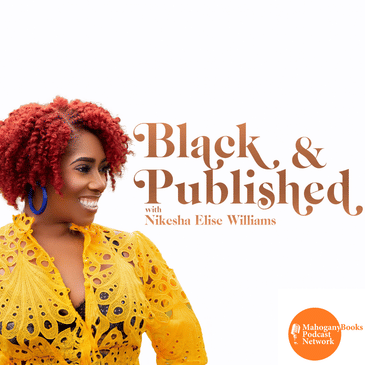

This week on Black and Published, Nikesha speaks with Minda Honey, author of the memoir, The Heartbreak Years. A retrospective for the twenty-somethings who are ready to stop leaping into the lives of the men they like and instead choose themselves and a life they love. The book is born out of Minda's series of essays for Longreads on dating politics. Her writing has also been featured in the Los Angeles Review of Books, the Washington Post, the Guardian, the Oxford American and Teen Vogue.
In our conversation, Minda discusses, her life and loves including her high school sweetheart to maintaining a platonic relationship with a magnetic man. How she gained the confidence and arrogance to bet on herself and what some called her “raunchy” work. And the reason she says she hasn’t given up on love despite the inherent risk and sometimes violence against women.
[00:00:01] What's good? I'm Nikesha Elise Williams and this is Black & Published on the Mahogany Books Podcast Network.
[00:00:17] Bringing you the journeys of writers, poets, playwrights, and storytellers of all kinds.
[00:00:23] And I'm excited to share with you five of my favorite episodes from the last four seasons.
[00:00:29] This week's rewind is from season four with author Minda Honey, who wrote the memoir The Heartbreak Years.
[00:00:35] What I love about this episode are the same things I love about Minda's book.
[00:00:40] How open and vulnerable she was, and just unafraid to go there on the page.
[00:00:46] You know, I prefer memoirs by regular everyday people rather than a celebrity memoir.
[00:00:51] Because I feel like if a regular person can get a book deal for a memoir, then they must have a story to tell.
[00:00:58] And it's going to be good.
[00:01:00] Minda's memoir and essays fits in that category and meets and exceeds that threshold.
[00:01:05] Reading her book is like having a good night out with girlfriends.
[00:01:08] And for all the single ladies listening, she gets into all the shenanigans of dating, mating, and trying to find the one amidst the foolishness and fuckboys.
[00:01:17] And why your girlfriends just might be your soulmates.
[00:01:20] So, without further ado, here's Enjoying the Life You've Built with Minda Honey.
[00:01:50] And trigger warning.
[00:01:51] This episode contains discussion of sexual assault and rape.
[00:01:57] Please be gentle with yourselves when listening.
[00:02:01] Girl, I tell you, I read the book in four days.
[00:02:04] Oh my God.
[00:02:05] I could not put it down.
[00:02:07] Oh my gosh.
[00:02:09] Get that on the recording.
[00:02:11] I will include it.
[00:02:12] Let the people down.
[00:02:13] Oh my gosh.
[00:02:16] Oh my gosh.
[00:02:16] Oh my gosh.
[00:02:16] But before we get into the heartbreak years, let's jump in with the first question.
[00:02:21] When did you know that you weren't a writer?
[00:02:24] I've always been a writer.
[00:02:26] Like ever since I was a little kid, I was always telling stories.
[00:02:29] And like, I remember learning how to type.
[00:02:32] And like the first thing I wanted to type up was a little story about all the jungle animals having a tea party.
[00:02:40] So, always been a writer.
[00:02:42] But you know, like my dad's a disabled American veteran.
[00:02:45] My mom's a Filipino immigrant.
[00:02:46] So it was very much like study hard, get a full scholarship to college, go to college, get a good job.
[00:02:52] And so I never knew how one actually became a writer and made a living off of writing.
[00:02:58] But I figured it out.
[00:03:01] You did.
[00:03:03] But before you figured it out, why did you feel the need to always pursue writing even though that wasn't what you were doing necessarily professionally?
[00:03:10] I think it's just, you know, when you're creative, like you just have like this kind of spiritual restlessness if you're not creating.
[00:03:19] And so I think writing has just always been mine and my way to express myself.
[00:03:24] I'm also a Capricorn.
[00:03:26] So I've described myself as like sexually liberal and emotionally conservative.
[00:03:31] And so on the page, I really have an opportunity to kind of sit down and spend some time with my feelings.
[00:03:37] Was it always an exploration of your relationships or lack thereof that you were putting down on the page?
[00:03:43] Wow. Interview gets spicy.
[00:03:45] My bad.
[00:03:47] I'm not trying to make it too spicy.
[00:03:49] You know, when I was an undergrad, I started out writing fiction because I like I didn't know what nonfiction was.
[00:03:56] I didn't really like know that was a thing. I thought only like famous people got to write autobiographies.
[00:04:01] And I had this fiction professor at undergrad who was really, really mean to me.
[00:04:08] And so I like I stopped writing short stories.
[00:04:12] And at some point in that workshop, somebody told me, like, you know, you could just write about your life.
[00:04:17] So as the years kind of went by, I found out about creative nonfiction as a genre.
[00:04:22] And so I started writing more memoir and personal essay.
[00:04:26] And yeah, it tended to be mostly about dating.
[00:04:30] Like some of these pieces started out in real time.
[00:04:33] So when I was in Orange County after me and my ex broke up, like I joined this writing group.
[00:04:37] Everyone else in the writing group except for me was like an older white person.
[00:04:42] Like the next youngest person had to be like 20 years older than me.
[00:04:46] And I would come in with these screeds about my ex boyfriend and Larry and them were just like, oh, no, not this again.
[00:04:54] Looking at you like heaven help her.
[00:04:56] Right.
[00:04:57] Like, please.
[00:04:58] You know, when you're in your 20s, you're kind of self involved.
[00:05:00] So I didn't care that they didn't.
[00:05:02] I would just keep bringing those pieces in.
[00:05:05] And yeah, like when I was putting the book together and I went back through some of those earlier drafts, I just cringed so hard because they were so emotional.
[00:05:17] Like you shouldn't be writing an essay the same way you write a live journal entry.
[00:05:23] No, you got to finesse it a little.
[00:05:27] There's a part in the book where you make a decision and like you don't talk about the writing journey as much in the earlier chapters.
[00:05:34] But there's a part where I think you were in Denver and you like, you know what?
[00:05:37] This isn't it.
[00:05:38] I need to go do something else.
[00:05:41] What was that moment in life like for you emotionally be like, you know what?
[00:05:46] I'm going to go back to California, get an MFA and do this thing that I'm that I've been keeping from myself.
[00:05:52] I always refer to Denver as my lifetime out because I was I was like I was like put in the corner essentially like I was isolated.
[00:06:01] I wasn't with all my girls in L.A.
[00:06:03] I didn't have like a lot of things I need to be doing.
[00:06:06] I didn't really have any friends.
[00:06:07] So it really gave me some time to sit down and think about what I wanted.
[00:06:11] I also think because that's about when I was like 29 about to turn 30.
[00:06:16] And I think there are just a lot of things that click into place for your life when you're about to turn 30.
[00:06:22] Young women are taught to fear 30 like if you're not married, if you're not this, if things aren't settled.
[00:06:27] But for me, it was more like I had experienced enough things to know that whatever came next, like I could handle it.
[00:06:35] And I also knew enough about myself at that point to know like what I wanted out of life and what I didn't want out of life.
[00:06:42] And you kind of hit this point where you're just like, oh, shit, like the choices I make now could lead to things that are going to be with me for a very long time.
[00:06:50] And like I said in the book, like I didn't want top mop bucket salesman like on my tombstone when I died.
[00:06:57] I also at that age for the first time had gotten to a place of financial stability where like I could afford to take a creative risk.
[00:07:05] Like I literally I got a full fellowship to UC Riverside.
[00:07:09] But then I also had my bonus check from the previous year to supplement that.
[00:07:14] So like I'm finally in a place where I can afford to prioritize my writing.
[00:07:19] And I think a lot of black women, this like ability to invest in ourselves and bet on ourselves happens for us later in life.
[00:07:26] And that's why we see success a little bit later as well.
[00:07:30] Like when you think of your favorite black women celebrities, a lot of them, their career peaks are like when they're 40.
[00:07:38] You know what I'm saying?
[00:07:38] Whereas a lot of these white women celebrities, their careers peak when they're 20.
[00:07:43] Like they're they're done by the time they hit 30.
[00:07:45] But, you know, Gabrielle Union, Taraji, all of these folks, they hit the mainstream at 40.
[00:07:52] So like don't give up on yourself just because you don't have white privilege to like subsidize your dreams.
[00:07:59] So then in doing that and having that, you know, kind of quarter life crisis.
[00:08:05] Oh, my God, I'm turning 30.
[00:08:06] What am I doing in my life?
[00:08:07] Did you feel like going after the MFA program made you more serious about your passion?
[00:08:13] I think in a way it made me feel like I was more serious because I was finally making choices that centered my writing versus having to center a career or centering a man.
[00:08:26] Like this was like, what have I always loved?
[00:08:28] What have I always been passionate about?
[00:08:30] And it's always been writing.
[00:08:32] So that was really kind of the first time that whether or not getting an MFA makes you feel serious, making the decision to be serious about my writing is what led me to the MFA.
[00:08:43] So then in prioritizing and taking yourself seriously, MFA be damned, really.
[00:08:51] When did you know that writing these stories, these essays about what you were experiencing as a young Black single woman in the dating world that was like, this is something that needs to be put into a book?
[00:09:07] I think, you know, I resisted it a little bit because I did receive so much pushback, you know, especially like in my MFA program.
[00:09:16] My writing was dismissed as chick lit.
[00:09:19] You know, people accused me of having a drinking problem.
[00:09:23] Like people just don't take the lives of women seriously.
[00:09:25] They don't take the lives of Black women seriously.
[00:09:28] So I had some doubts and I was like, oh, I need to write about like more serious things.
[00:09:34] But that just wasn't what was on my spirit to write about.
[00:09:37] And eventually, like you have to write the story that wants to be written.
[00:09:41] Like all writers were always coming back to that same core story.
[00:09:45] And like I came into the MFA because I had so much work experience, because I had come out of like this very successful sales and marketing role.
[00:09:55] I came into the MFA in a slightly different position than a lot of people because a lot of those folks are career students or they had very little work experience before they went to the MFA.
[00:10:05] So everything felt very life or death to them.
[00:10:08] And they also felt like they were competing with the people in the room.
[00:10:11] Whereas I knew like y'all are my competition, like the competition is out in the world.
[00:10:17] And so I also knew, though, like if this whole writing thing doesn't work out, like I've got monetizable skills that I can return to.
[00:10:25] So I think that that gave me a little bit more confidence and a little bit more ability to take that risk and to just really double down on doing what I wanted to do.
[00:10:36] You say confidence, but I wonder if it was really it gave you more freedom.
[00:10:41] To be you on the page.
[00:10:43] Sure. Yeah, I think freedom is a good word.
[00:10:46] I think sometimes it was arrogance.
[00:10:50] You know, I got I got a little Kanye strand in me.
[00:10:53] So I think we all do.
[00:10:56] Oh, Kanye.
[00:10:57] College dropout Kanye.
[00:10:58] Right.
[00:10:59] So then let's talk about the long trajectory toward making the early drafts of the essays.
[00:11:06] To this book that you have called The Heartbreak Years.
[00:11:11] What was that editing process like and even the growth process for you personally?
[00:11:17] Yeah.
[00:11:17] So, I mean, me and my ex broke up at 23 and I'm 38.
[00:11:22] I like this book is just now coming out, you know, and like I said, some of those pieces I was writing in real time.
[00:11:31] Some of the pieces I wrote while in grad school and some of those pieces I wrote in the years following grad school.
[00:11:38] Like A Farewell to Fuck Boys was one very lengthy essay for long reads that went viral.
[00:11:44] And then like I broke it up.
[00:11:45] So in the book, it's like three separate essays.
[00:11:48] But I could just tell like not only had I like grown as a writer, but I had grown as a person.
[00:11:53] So even though like I'm nearly 40 and this book about my 20s is coming out, like I could not have written this book any sooner.
[00:12:02] So just like a certain amount of time needs to pass.
[00:12:06] And then I needed to have like a certain number of years pass so that I could grow as a writer.
[00:12:12] And I always tell my students like all of this work, all of these layers, none of that happens in the first draft.
[00:12:18] Like, you know, you got to return to things over and over.
[00:12:22] And some of these things, you know, with just the way that publishing and freelancing and things work today, sometimes you have a much shorter window of time with a piece.
[00:12:33] But there's definitely value in some of these pieces that sit with you for years.
[00:12:39] And just, you know, like a good broth, like a good gumbo.
[00:12:42] Like the paper is only going to get better over time.
[00:12:44] And that's very evident in the writing and in the book itself where, you know, you have the first layer may have been just the raw emotion and the situation of whatever happened that you're talking about.
[00:12:56] But then underneath that, you are digging into how this affects gender roles, how this affects heteronormativity, how this affects, you know, rape culture and all of these different things.
[00:13:09] That not just from a woman's perspective or, you know, mental health, like all of these things that we don't talk about in context of relationships, but are very much a part of doing life with people.
[00:13:23] Whether you marry them or just fuck them on the first night and send them on their way, they're always there.
[00:13:29] And so I love how you dig into that depth while also, you know, airing out your shenanigans at the same time.
[00:13:39] I try to strike a balance.
[00:13:42] That was great.
[00:13:43] I loved it.
[00:13:44] I really, really did.
[00:13:46] So with that said, what was your publishing journey like once you said, OK, I've got something, let's approach proposal, that whole thing?
[00:13:53] Yeah, so I graduated with my MFA in 2016 and I didn't really write anything new until 2017.
[00:14:03] I had an essay go viral in March of 2017, Woman of Color in Wide Open Spaces, about this road trip that I took across the country to decompress from the oppressive whiteness of MFA programs, only to discover that the great outdoors is also really racist.
[00:14:19] And so I wrote this essay.
[00:14:21] It went super viral.
[00:14:23] And then I had an agent assistant from a really big agency reach out to me like, what do you have?
[00:14:30] Do you have anything?
[00:14:31] And I was like, oh, I'm not ready.
[00:14:32] I'm not ready yet.
[00:14:33] And so then it took me like another couple of years before I was like, OK, I'm in a place to start looking for an agent.
[00:14:41] So 2019, I spent almost the whole year querying, which is the worst part, I think, of the entire process, because everything after that, you have your agent with you.
[00:14:51] So you're not in it alone.
[00:14:53] But with querying, you're just out there.
[00:14:55] But my agent ended up finding me December of that year when I had given up all hope and I was so frustrated.
[00:15:02] Kayla Leitner reached out to me and was like, I read one of your essays in Lily Danziger's Burn It Down.
[00:15:12] And then I went and looked up everything else you've ever written.
[00:15:15] And like, I'd love to represent you.
[00:15:17] And Kayla's kind of a big deal now.
[00:15:19] But when she found me, I was her first client.
[00:15:21] I was her first client.
[00:15:22] And she was at a smaller agency.
[00:15:24] And so when she made the leap, she took me with her.
[00:15:26] And she's like, you want to come with us?
[00:15:27] Yeah, I want to come with you.
[00:15:28] And one of the things that Kayla said about my writing, she's like, I feel like I'm back in Georgia at Waffle House at 3 a.m., laughing it up with my best friend.
[00:15:38] And I was like, she gets it.
[00:15:40] She's the type of person that she's who I'm writing this for.
[00:15:44] So I was like, yeah, let's ride.
[00:15:45] Let's go.
[00:15:46] Let's do this together.
[00:15:47] And so I'm really, really happy that I signed with her.
[00:15:51] So I signed with her into 2019.
[00:15:54] We decided we were going to go out on submission March 2020.
[00:16:00] See where this is going.
[00:16:02] Yeah.
[00:16:03] So the pandemic hit.
[00:16:05] And at the time, I was the director of a college program.
[00:16:08] So the college, you know, was obviously trying to pivot online.
[00:16:11] And I was also very new in my role.
[00:16:14] Like this was only my second semester in the role.
[00:16:16] So I was like very overwhelmed trying to like get everything online, trying to, you know, guide the students through this.
[00:16:23] And then also I'm in Louisville, Kentucky.
[00:16:26] So March 2020 is also when the social justice uprisings for the murder of Breonna Taylor began as well.
[00:16:32] Like I live very close to where the protests were.
[00:16:35] So it was just helicopters over my house constantly.
[00:16:40] The police, like everything happened with the news.
[00:16:42] Like it was just very, very heavy.
[00:16:43] So Kayla was like, hey, why don't you like take care of yourself and we will go on submission when we're ready.
[00:16:50] So we didn't go on submission, I think, until June or July.
[00:16:54] And I got rejected by everybody in the first round.
[00:16:57] And Kayla was like, I know this book will sell.
[00:17:00] We just need to like tweak the book proposal a little bit.
[00:17:03] And I was all in my feelings.
[00:17:05] And it took me months to make like 20 minutes worth of tweaks.
[00:17:09] I was like, whatever.
[00:17:11] I'm a top salesperson.
[00:17:13] I will sell this book out of the trunk of my car.
[00:17:17] They're all going to be sorry.
[00:17:18] It's all up in my feelings.
[00:17:20] As someone who sold books out of the trunk of their car, you don't want to do that forever.
[00:17:25] Not the way.
[00:17:26] Not something you want to do forever.
[00:17:27] It's possible.
[00:17:28] I did it.
[00:17:29] I've done it for years.
[00:17:30] But it's not.
[00:17:32] It's not.
[00:17:33] Make the edits.
[00:17:35] I made the edits.
[00:17:36] We went on submission October 1st.
[00:17:39] The book went to auction and it was sold by the end of the month.
[00:17:43] So, you know, so it's been almost three years.
[00:17:46] And yeah, like when I first got that date, when it was first, like 2023, I was like, is that a typo?
[00:17:51] Like what are you, 2023?
[00:17:53] Like what is that even?
[00:17:55] What are we doing?
[00:17:56] So, but, you know, with nonfiction, you saw the book on proposals.
[00:18:00] So a lot of times the book does not exist yet.
[00:18:02] So it just takes a little bit more time to write it, edit it, round up all the trees to publish it on.
[00:18:08] So yeah, it's been, it's been a journey.
[00:18:13] Look, the trees are not a given in today's climate.
[00:18:17] They are because the paper shortage is real.
[00:18:19] The paper shortage is real.
[00:18:21] Okay.
[00:18:22] It's so hot.
[00:18:24] The plants, the photosynthesis is failing.
[00:18:26] I've read recently.
[00:18:27] So get the e-book.
[00:18:32] I'm trying to hold the galley in my hand.
[00:18:35] Just get the book.
[00:18:36] So let's, let's get into the book.
[00:18:38] Do you have it?
[00:18:39] Can you read from it?
[00:18:41] Yes.
[00:18:43] Because we have to talk about it.
[00:18:44] Minda Honey's The Heartbreak Years chronicles Minda's journey from first love and heartbreak to saying farewell to fuckboys for good.
[00:18:54] Using her birthday to mark the milestones of her love life, Minda discovers as she moves from her early 20s to late 30s that no, you can't turn a pot farmer into a house husband.
[00:19:05] And anyone wanting partnership needs to protect your peace.
[00:19:10] Here's Minda.
[00:19:11] Okay.
[00:19:12] I'm going to read from a section that's called Denver is White People's Atlanta.
[00:19:19] In this chapter, like, like my work has been on very short notice, moved me to Denver.
[00:19:25] I'm feeling very depressed because I don't have any friends.
[00:19:28] It's cold.
[00:19:29] And I end up dating my neighbor who also happens to be a pot farmer.
[00:19:35] And this is the section where I meet him.
[00:19:39] It was February 2013, more than a week after Valentine's Day.
[00:19:45] I met Nick online.
[00:19:46] A few messages in, we discovered we lived in the same massive downtown Denver apartment complex.
[00:19:53] So close to the Rocky Stadium, I could hear the roar of the crowd with each crack of the bat.
[00:19:59] Nick invited me to meet him at the liquor store on the corner.
[00:20:03] I said yes.
[00:20:04] I said yes, even though I wondered who the fuck wants to meet at a liquor store on a first date.
[00:20:11] Decidedly, not a meet cute.
[00:20:12] But at least it was a reason to leave my apartment.
[00:20:15] By the time Nick walked into the liquor store, I was already at the register with a bottle of red wine in hand.
[00:20:21] He was late.
[00:20:23] He nodded at me as if we already knew each other.
[00:20:25] The cashier, who usually commented on how pretty I looked in my driver's license photo, saw the nod and looked portrayed.
[00:20:32] Nick was barely taller than me.
[00:20:34] And when I saw him, I remember I didn't immediately find him attractive.
[00:20:38] Something about the shape of his head.
[00:20:40] But I made the split-second decision to like him anyway.
[00:20:44] Outside of the liquor store, his dog was tied to a rail with an old belt looped around its neck.
[00:20:49] He'd had his dog for quite some time, but for some reason, he didn't own a leash.
[00:20:54] I didn't say anything.
[00:20:56] My apartment's messy, but you're welcome to come over and kick it, he said, as he freed his dog from the railing and wrapped the end of the belt around his fist.
[00:21:04] I didn't know this guy, so I wasn't trying to be alone with him in his dirty-ass apartment.
[00:21:07] My place was clean, but I wasn't ready to have this stranger over.
[00:21:12] Instead, I suggested we hang out in the communal area of our apartment complex.
[00:21:17] Complexes that advertise themselves as resort-style living always have these oversized living room, wreck area types of spaces decorated like a page out of a pottery barn padelock.
[00:21:29] With overstuffed couches, vases with dramatic fake floral arrangements, two large coffee tables with two sharp corners, a supersized TV with all of the channels,
[00:21:40] and some overly complicated beverage machine that serves every variation of coffee you can imagine, if you can figure out the right order to hit the buttons in.
[00:21:48] There's almost never anyone using this space.
[00:21:51] Within the hour, Nick and I were curled up so close on the couch, any closer, and we'd have been cuddling.
[00:21:57] Drinking together can quickly close the distance between you and a stranger.
[00:22:00] I told him about my move.
[00:22:02] He told me about where he grew up in Baltimore, his work as a pot farmer, how few Black people there were in the industry.
[00:22:09] How growing weed had always been a side hustle for him, but after college and after he tired of office work in the East Coast,
[00:22:16] he decided to move to Colorado to make it a full-time venture.
[00:22:19] He was good at it.
[00:22:20] He drank his beer.
[00:22:22] I drank my wine.
[00:22:23] We kept trading little parts of our stories.
[00:22:25] He was 35, and I turned 28 a month earlier.
[00:22:28] I was five years older than the women he usually dated, and he felt the need to inform me they were usually white.
[00:22:35] He told me about girls from his past, his cheating ways, telling me without telling me not to fall for him even as he pursued me.
[00:22:42] In the end, I would remind myself I walked into this knowingly.
[00:22:47] So you named some guys in the book, and I think the names that I gravitated toward the most was Henry, Chevy, and then Hunter.
[00:22:59] Okay.
[00:23:01] And I should also be clear that I changed everyone's names in details.
[00:23:05] I know everyone's names have been changed to protect the guilty.
[00:23:09] I'm aware.
[00:23:10] But I was like, whoever these men are, these are the ones that I want to know about.
[00:23:15] Why was it important for you to memorialize some of the people that you have met and dated and had some type of connection with in this book?
[00:23:24] You know, in the final chapter, epilogue, I talk about how I want this millennial waiting to exhale.
[00:23:31] And I also talk about how just because these relationships were shorter or they didn't end up in marriage or life partnership doesn't mean that they didn't play a role in helping me discover who I am or that they didn't shape my life in some significant ways.
[00:23:48] Those relationships, I think, are just as valid and just as important.
[00:23:53] And, you know, with Henry especially, like, he just has this magnetism.
[00:23:58] My friends would always call him Mr. GQ.
[00:24:00] And so there was just like something about him.
[00:24:04] And there were a lot of men that did not make the book.
[00:24:09] And some of those stories are just as absurd, just as ridiculous.
[00:24:13] But I think with the folks that I chose, if you notice a lot of the chapters kind of revolve around a birthday or they kick off with a birthday.
[00:24:24] So I think that a lot of these guys were just really something about our relationship really said something about where I was at that specific age and that specific moment in my life.
[00:24:35] And, like, what I was looking for and the fact that I was looking for it in this person instead of, like, looking for it elsewhere or looking for how I could, like, cultivate it within myself.
[00:24:46] Okay.
[00:24:46] And we've kept it cute.
[00:24:48] And I want to keep it cute.
[00:24:49] No, no, no.
[00:24:50] No, no, no.
[00:24:50] But I mean that by there's something that happens to you early on in the book, early on in your understanding of intimate partner relationships.
[00:25:00] And that's assault.
[00:25:02] And it plays a trajectory through your life.
[00:25:06] Like, you don't approach relationships the same after that.
[00:25:10] And you were a teenager.
[00:25:12] And so you talked earlier about how people were like, well, you know, is she an alcoholic?
[00:25:16] And I wonder, and you even address it in the book where, like, I think your sister says, you know, the family's struggling, one in three in the family.
[00:25:24] And you're like, and you're in your head like, uh, it's me.
[00:25:26] You know, how have you or are you still coping, healing from that situation, the assault?
[00:25:35] And then also how you then approach sexual relationships and relationships in general after that?
[00:25:42] Yeah.
[00:25:43] Yeah.
[00:25:43] Yeah.
[00:25:44] Um, that's a, that's a hard question to answer because I think in some ways like that was, I mean, at this point, 20 years ago.
[00:25:52] So, but it did happen so early in my like dating and exploration of like sex and intimacy and romance that it was very destructive.
[00:26:04] But I think that my high school sweetheart, like the relationship that I had with him went a long way towards kind of insulating me from a lot of that.
[00:26:14] But it, you know, it just took a while for me to even be able to talk about what had happened to me, unpack it, and then address it at this like emotional level and examine the role that it played, was playing in like my relationships in the present.
[00:26:31] And, you know, there is a relationship between sexual assault and binge drinking, you know, and then also like your twenties can just also be a very like heavy partying time.
[00:26:42] And recent, like I don't drink anymore, but when it comes to these, to like the way that those relations, the way that that early trauma affected the rest of my relationships, the reason it's a hard question to answer is because like, I think there's a point in the book where I talk about how these traumas are like compounding and they stack on top of each other.
[00:27:02] Because that sexual assault, that rape was not the last time that like I was sexually assaulted.
[00:27:07] It wasn't the last time that a man was like violent towards me.
[00:27:12] And so every small thing like street harassment or, you know, I write about the man stalking me or like going on dates where men have like been aggressive and all of these things, like that is a compounding and ongoing and never ending trauma.
[00:27:28] So I don't know that I'll ever like fully recover from that because it's unending.
[00:27:35] You have a line in the book, in the story of Camp Pendleton, where you said other men benefited from how Henry's trustworthiness had dismantled my justified defenses.
[00:27:45] And I think about in this moment of social media where it's so rare to find safety, sometimes in the presence of men, but one man can make you feel so safe that you become disarmed.
[00:27:59] And I'm thinking specifically about the video that's gone viral of the young woman who was hit with a brick because she wouldn't give a guy her phone number.
[00:28:11] And I remember years ago, the other woman was thrown in the trash can because the guys just circled around her and felt that that was what they wanted to do.
[00:28:20] And she stayed in the trash can laughing like it was a joke until they left.
[00:28:25] And when you talk about violence against women, it is very evident that as much as people want to be in partnerships or be in relationships, there is always a risk to women, not just in having your heart broken, but in being hurt and harmed in a very real way.
[00:28:44] I don't know if you want to speak to that at all.
[00:28:45] Yeah, in a very real way with very long-term consequences, you know, beyond physical, emotional and sexual violence, there's also financial violence.
[00:28:56] You know, how many women have stayed in relationships that they shouldn't have stayed in because they could not afford to leave those relationships or leaving those relationships costs them everything.
[00:29:05] So there are these consequences.
[00:29:08] But then if you don't make yourself vulnerable and take chances on people, then you're blamed as well for like why you're alone and why you didn't end up with anyone.
[00:29:17] And yeah, in a lot of ways, there's no winning.
[00:29:20] Like I write in the book about how, you know, this man followed me and then he jacked off at me in broad daylight, very close to my home.
[00:29:29] And so I went through like a period of time where I could not leave my house, like walking anywhere, being outside alone for any period of time.
[00:29:37] I just couldn't do it.
[00:29:39] I just didn't feel safe.
[00:29:40] And eventually, after, you know, many, many months, I did start walking again.
[00:29:47] And I was walking to like this place to like grab breakfast and I had on like my yoga pants and I could see in the reflection of the building, like every step I took, like my butt had a little jiggle to it.
[00:30:01] And then like I look up and I see like this unhoused man kind of like coming across the street.
[00:30:05] I see this other man like sitting in his car, another man like just kind of walking up the street.
[00:30:09] None of these people posed any sort of specific danger to me.
[00:30:14] But I had what I presume was a panic attack and I immediately like had to go home.
[00:30:20] I was like, not OK.
[00:30:22] Walked back home and I started Googling whether or not you can have PTSD from street harassment.
[00:30:29] And the like this page for Reignin, like the Rape and Incest Support Network or whatever came up and was like, yeah, girl, you can definitely get PTSD from that.
[00:30:38] If you want to talk to somebody about it, here's a phone number to call.
[00:30:41] Wow.
[00:30:42] I'm like, oh, great.
[00:30:42] A 1-800 number for street harassment.
[00:30:44] No, no, no, no, no, no.
[00:30:46] That's not what it was.
[00:30:47] So when you call that 1-800 number, what it does is reroute you to a local resource in your area, which you do not know until you call.
[00:30:58] So the shelter for women and children who have experienced domestic violence is who answered my phone call.
[00:31:06] So I'm like, I'm experiencing street harassment.
[00:31:08] They're like, you know, this is the Center for Domestic Violence Mail.
[00:31:10] But I'm like, oh, well, no one's like domestically violencing me.
[00:31:18] I just like I'm dealing with street harassment.
[00:31:20] I don't like I don't want to waste your time.
[00:31:22] I'm sorry.
[00:31:23] I'm going to hang up.
[00:31:23] And the woman was like, no, we can talk about that, too.
[00:31:26] So I started talking to her and I'm like telling her about like I was like, yeah.
[00:31:30] And so like this thing happened and I don't feel safe when I leave my house because like I'm not safe.
[00:31:36] Like I'm not being paranoid.
[00:31:37] Like it is factually unsafe for me as a woman to leave my home.
[00:31:41] Every time I leave my home, I am in danger and I don't know what to do about that.
[00:31:45] And she was like, I mean, yeah, you definitely are.
[00:31:49] But what are you going to do?
[00:31:50] Stop living your life.
[00:31:52] And then I was like, you know what?
[00:31:54] You're right.
[00:31:55] Thank you.
[00:31:56] Have a nice day.
[00:31:57] Click.
[00:31:59] And for me, it was just like in that moment, I felt like she understood like exactly how terrifying it was that these things happen.
[00:32:08] But also it was just so practical.
[00:32:10] Like, what are you going to stop living my life?
[00:32:12] Stop dating.
[00:32:13] Stop trying to find love.
[00:32:14] Stop connecting with men.
[00:32:16] And like for every man that has been violent towards me, there's been so many other men who have like shown me care, who have shown me tenderness.
[00:32:27] And I think, you know, that's that shift is really starting to happen where men are becoming a lot more aware of like, you know, that their behavior is unacceptable and they will be called out for it.
[00:32:42] So, yeah, I just try to like lean into that.
[00:32:46] Like, you know, in the book, when I talk about how when I was binge drinking and like having blackout sex with men, in a way I was proving to myself that when I was raped as a teenager, completely sober, wearing pants that just like come from an award ceremony at my high school.
[00:33:02] Like, I had not done anything to quote unquote deserve being raped.
[00:33:07] And so here I am drunk in miniskirts with men I don't know.
[00:33:11] And those men didn't rape me either.
[00:33:13] You know, there wasn't the same kind of like violence, like as like holding someone down while they're crying sort of situation.
[00:33:21] So so even in like that weird, twisted way, I was also kind of like proving to myself, like to some degree, it doesn't matter what I'm wearing, if I'm sober, if I'm not sober, if I've left my house, whatever is going on.
[00:33:35] All it comes down to is, was there a violent, aggressive, sexually inappropriate man in my vicinity?
[00:33:43] Like that's what it comes down to.
[00:33:45] In the end of the book, you talk about, you know, wanting the millennial waiting to exhale, as you mentioned before.
[00:33:51] And you also talk about the importance of your female friendships, but then also how even though this book is called The Heartbreak Years, you haven't given up on love, but it's coming with more conditions.
[00:34:04] And this passage, I think I underlined it like four times.
[00:34:08] You say,
[00:34:47] As someone who met the man at 22, married the man at 25, had two babies and now is divorced at 37.
[00:34:57] I felt this in my whole soul because it doesn't matter if you do things the right way or if you're single forever or have just different relationships, but never find the one.
[00:35:12] Because I felt like in my experience now, as a woman, in this particular day and age, you don't have to make certain sacrifices if you don't want to.
[00:35:25] Like you can be single or you can be divorced or you can be married, but every choice that you make, you have to realize is a choice that you can make and a choice that you can change.
[00:35:35] So in saying that you want the man to fit the life that you've built.
[00:35:41] Yes.
[00:35:43] How is that working out for you, sis?
[00:35:48] Well, I mean, I still don't have a man, but I do have peace of mind.
[00:35:55] Whereas previously I often had a man and no peace or had no man and wasn't like, you know, in a peaceful place about it, did not feel at ease with that.
[00:36:06] Whereas now, like, because I have like created a life that like I love and filled it with people that I love and, you know, have pursued the things that bring me joy.
[00:36:19] And now I'm just kind of waiting for a man to find me in the midst of this joy.
[00:36:22] And in a way, like I've raised the stakes.
[00:36:25] Like when I was in my 20s, it was so easy for me to abandon myself and my life because I hadn't cultivated things that I felt like like were worth holding on to.
[00:36:36] So I was ready to just kind of like leap into the lives of these men.
[00:36:41] Whereas now that I do like really enjoy myself and really enjoy my life, the stakes are higher.
[00:36:47] So any man that wants to come into my life, you know, he has to at the very least not be disruptive to it.
[00:36:55] And, you know, at the most be being adding to the joy that's here.
[00:37:00] Like I say in the book, you know, if a man is the worst part of your life, like that's an easy problem to fix.
[00:37:06] Like, you know, you can get rid of a man.
[00:37:09] It's going to it takes you a lot longer to find a new job, update that resume.
[00:37:12] But like, you know, a breakup can happen in minutes.
[00:37:14] So it's just like the older you get, the less and less it's worth your peace.
[00:37:21] Like you just really, really got to protect your peace.
[00:37:24] And you got to find men who want to meet you halfway on something, who want to be a part of your life instead of expecting you to drop everything and then to be an accessory to their life.
[00:37:37] But at some point I had to ask myself, like, what if this is it?
[00:37:40] Like, what if you're not going to meet that person?
[00:37:43] What choices would you make then?
[00:37:45] What life would you want then?
[00:37:46] How would you want that life to look like, you know?
[00:37:49] And so then I just started making those choices, you know, living that life.
[00:37:53] And so at the end of the day, as long as it's a happy life, the details aren't as important to me.
[00:37:59] Hmm. So with all of that said, what do you want readers, men, women, they, them, gay, straight, trans, old, young, married, single people to take from this book?
[00:38:16] Because I feel like everybody should read it.
[00:38:18] Like, just read the book.
[00:38:20] Thank you.
[00:38:21] Thank you.
[00:38:21] I just want people to know that they're not in it alone because I think when you're going through these heartbreak years, especially long stretches of heartbreak or dissatisfaction, whether that's outside of a relationship or in a relationship, you can feel very isolated.
[00:38:36] And like, you're the only one that hasn't figured it out, who hasn't found that person.
[00:38:40] And like, you're not, you're not alone.
[00:38:43] We all have these heartbreaks.
[00:38:45] We all have these moments of feeling alone, feeling unwanted, feeling like no one will ever understand us.
[00:38:53] And so I just want people to know, like, it's not just you and it's going to be okay.
[00:38:59] Yeah.
[00:39:00] Because you can feel all those things and the man is in the bed next to you.
[00:39:02] Me and my future husband going to be living in a duplex.
[00:39:07] And I understand why.
[00:39:11] All right, let's switch to a speed round and a game before I let you go for the morning.
[00:39:16] What is your favorite book?
[00:39:18] Oh my gosh, I don't know.
[00:39:20] Like, you're not supposed to ask, right?
[00:39:22] Is that?
[00:39:23] I'm going to, I'm going to go, I'm going to say Zora Noel Hurston, Their Eyes Were Watching God is the book that I've read the most because when I was like 12 and my parents got divorced,
[00:39:33] I have like a super religious auntie and she gifted me the book because God was in the title.
[00:39:39] So she thought like maybe turning to God would help me overcome the trauma of my parents' divorce.
[00:39:47] Little did she know that that's not what that book is about at all.
[00:39:51] Not about that at all.
[00:39:53] And I think, you know, Janie's story definitely, even if at the time I couldn't relate or understand it,
[00:40:01] I think it absolutely shaped me as a woman and as a writer.
[00:40:06] Who is your favorite author?
[00:40:07] Why are you doing this to me?
[00:40:11] Oh my gosh.
[00:40:12] I'm going to go with Kieset.
[00:40:14] Okay.
[00:40:15] What do you think is the best book to movie or series adaptation?
[00:40:20] Ooh, that's interesting.
[00:40:23] Jenny Hans, To All the Boys I Ever Loved, I think they did a really great job of turning those books into movies.
[00:40:31] So then if the Heartbreak Sears gets the series treatment, would you want it to be more like a girl's, a sex in the city, a girl friends, or live and single slash friends?
[00:40:45] I think it's more of like an insecure.
[00:40:48] Ah!
[00:40:50] If money were no object, where would you go?
[00:40:53] What would you do?
[00:40:54] And where would you live?
[00:40:55] You know, I'm about to go to the Philippines with my family and I've never gone back.
[00:41:00] I was like born there.
[00:41:01] And so this is pretty major.
[00:41:04] Like my mom, my sisters, my little niece, my brother-in-law were all going to go.
[00:41:08] So I think if money were no object, I probably, instead of going for two weeks, would probably go for like a few months and really kind of immerse myself in that culture and in that world.
[00:41:19] I just, you know, I always imagine myself having just a very idyllic, peaceful, sun-filled cottage full of books, very cozy that I can write in.
[00:41:32] But then also somehow it's like within 15 minutes of like a major city where I can also have a really wonderful black male middle class dating pool to splash around in.
[00:41:49] Best of both worlds.
[00:41:52] What brings you joy?
[00:41:55] Oh man, like my little niece, she's seven.
[00:41:58] She brings me joy.
[00:41:59] Like I, I love, I love being a black auntie.
[00:42:04] Like the moment I got to like pass her a peppermint in church, like I had the candy ready in my purse.
[00:42:09] I was like, yes, yes, I cannot wait.
[00:42:11] I don't know that I love writing.
[00:42:13] Like they say, you know, you don't love writing.
[00:42:15] You love having written.
[00:42:16] But I do love creating and fostering writing community and teaching writing workshops and being able to open the door for other writers, give them opportunities, give them guidance.
[00:42:27] Because it can be, it can be a bit of a mystery.
[00:42:30] And what brings you peace?
[00:42:32] Oh man.
[00:42:33] Going to bed at a reasonable hour.
[00:42:36] Leaving at the first red flag instead of the sixth.
[00:42:42] A fully stocked savings account.
[00:42:45] Don't bring me lots.
[00:42:46] I'm a Capricorn.
[00:42:47] So yeah, like that moment when your fridge is full, your dishes are done, your clothes are clean and your bed sheets are fresh.
[00:42:56] Like, mm, mm, mm.
[00:42:59] All right.
[00:42:59] So our game is called Rewriting the Classics.
[00:43:02] Classic is however you define it.
[00:43:04] Or you can take the cannon if you want to drag it.
[00:43:08] Name a book that you wished you would have written.
[00:43:11] Hanif Abdurraqib's Little Devil in America.
[00:43:15] I just don't know how he does it.
[00:43:17] Like, the level of research, the poetic language, the thoroughness, the love that he has for Black people.
[00:43:25] Like, all of that emanates off of the page.
[00:43:28] Ross Gay's Book of Delights.
[00:43:32] Inciting joy.
[00:43:33] Anything that Ross Gay has written.
[00:43:34] I'm also in the middle of reading Destiny Hemphill's Motherworld.
[00:43:39] And I am not a poet.
[00:43:43] I wish I had the understanding of language and words that poets have.
[00:43:49] But I do not.
[00:43:50] But I am just a few pages into this book.
[00:43:53] And it is hitting hard on every level.
[00:43:56] She is such a deep thinker.
[00:43:59] I am excited for every poem in this book.
[00:44:02] And if I was a poet, that is the type of poet I would want to be.
[00:44:06] Name a book where you want to change the ending.
[00:44:09] And how would you do it?
[00:44:11] Years and years ago, I read The Valley of the Dolls.
[00:44:15] And I have always wanted to rewrite that book.
[00:44:19] But I want to write it using the framing of Drake's Houston Land of Vegas.
[00:44:24] But I would want to make it contemporary and set it in the world of these strip clubs.
[00:44:30] Maybe I've said too much.
[00:44:32] Maybe I've said too much.
[00:44:32] Don't nobody steal my Valley of the Dolls idea.
[00:44:36] No one's stealing the Valley of the Dolls.
[00:44:38] But one, I want you to write this book.
[00:44:39] But until you do, I'm just waiting for season three of Pea Valley to come back.
[00:44:43] Yes.
[00:44:43] Because that's what it's giving.
[00:44:46] And that's how I know it will work.
[00:44:48] All right.
[00:44:48] And then final question for rewriting the classics.
[00:44:51] Name a book that you think is overrated or overtaught, Professor, and why?
[00:44:57] The Catcher in the Rye.
[00:44:59] Like, The Catcher in the Rye is...
[00:45:01] I cannot stand...
[00:45:02] Like, at my youngest age, whenever they signed that book, I could not stand this book.
[00:45:07] I was like, he's so boring and so whiny.
[00:45:11] And I just don't understand why I'm supposed to care about this boy.
[00:45:15] Like, I just don't get it.
[00:45:17] And I will say, I have not given the book a reread as an adult.
[00:45:22] But I do know at some point, just like on my own, maybe in college or shortly after college,
[00:45:29] I read Sylvia Plath's The Bell Jar.
[00:45:32] And I think it was doing what people want to pretend like The Catcher in the Rye is doing.
[00:45:37] And I think at the very least, those two books should be assigned together.
[00:45:41] Or you can just boot Catcher in the Rye off of your syllabus and supplement in The Bell Jar instead.
[00:45:49] All right.
[00:45:50] So our final question today.
[00:45:51] When you are dead and gone and among the ancestors, what do you want someone to write about the legacy of words and work that you've left behind?
[00:46:03] Oh, man.
[00:46:06] That's such a big question.
[00:46:10] I guess I want people to just, you know, like she loved us, you know, like, like these words were written from like a place of love and care and tenderness.
[00:46:20] Like, that's what I would want people to remember about me and my writing and when I would want them to turn to my writing to feel that love.
[00:46:30] I hope you enjoyed this week's Black and Publish Rewind with Minda Honey.
[00:46:35] If you haven't read The Heartbreak Years and you want to, you can get it from Mahogany Books, where you can find a wide range of titles by Black authors and support a Black-owned business.
[00:46:45] Plus, listeners of this podcast can save 10% on regular price books and merchandise when you use the coupon code BLACKPUB at checkout.
[00:46:55] That's B-L-K-P-U-B.
[00:46:58] Head over to MahoganyBooks.com and grab your next great read today.
[00:47:03] I'll holler at y'all next week for our final Black and Publish blast from the past.
[00:47:08] Peace.